UŠḪUM.GAL
[2025]
for serpent
duration: ca 11 min
written for: Jack Adler-McKean
commissioned by: Jack Adler-McKean with support from Lund University
first performance: 7 February, 2025; Lund, Sweden
score published by Edition Gravis
UŠḪUM.GAL (/uʃˈxum ɡal/) (Akkadian: 𒍑𒄷𒅗𒃲) is a concept from Mesopotamian mythology and linguistic tradition, referring to a powerful mythological serpent or dragon. The name literally means "great serpent" or "great dragon" in Akkadian. In akkadian art and literature, such creatures often represent chaos or the cosmic struggle between order and disorder.
UŠḪUM.GAL forms the basis of the solo part of EN.GAL.TU.TEŠ for firebird trumpet, trombone and serpent. The firebird part can also be performed by itself as EN.ZU. EN.GAL.TU.TEŠ is itself a component of PARTICLES for ensemble and electronics (2022-)

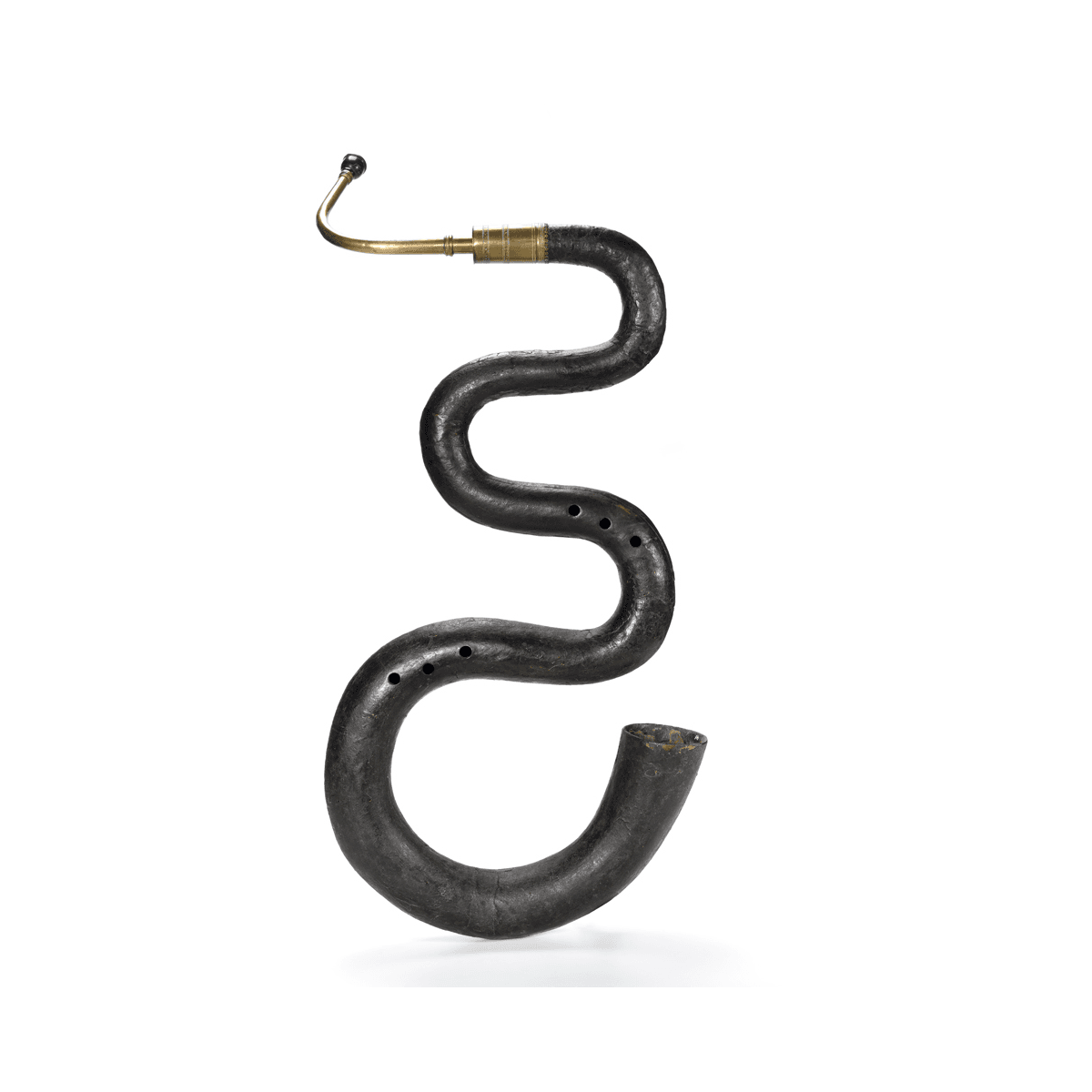
The serpent is a low-pitched early wind instrument in the lip-reed family, developed in the Renaissance era. It has a trombone-like mouthpiece, with six tone holes arranged in two groups of three fingered by each hand. It is named for its long, conical bore bent into a snakelike shape, and unlike most brass instruments is made from wood with an outer covering of leather or parchment. A distant ancestor of the tuba, the serpent is related to the cornett and was used for bass parts from the 17th to the early 19th centuries.