ŠU.ÍL.LÁ : GI.ÍL.LÁ
[2026]
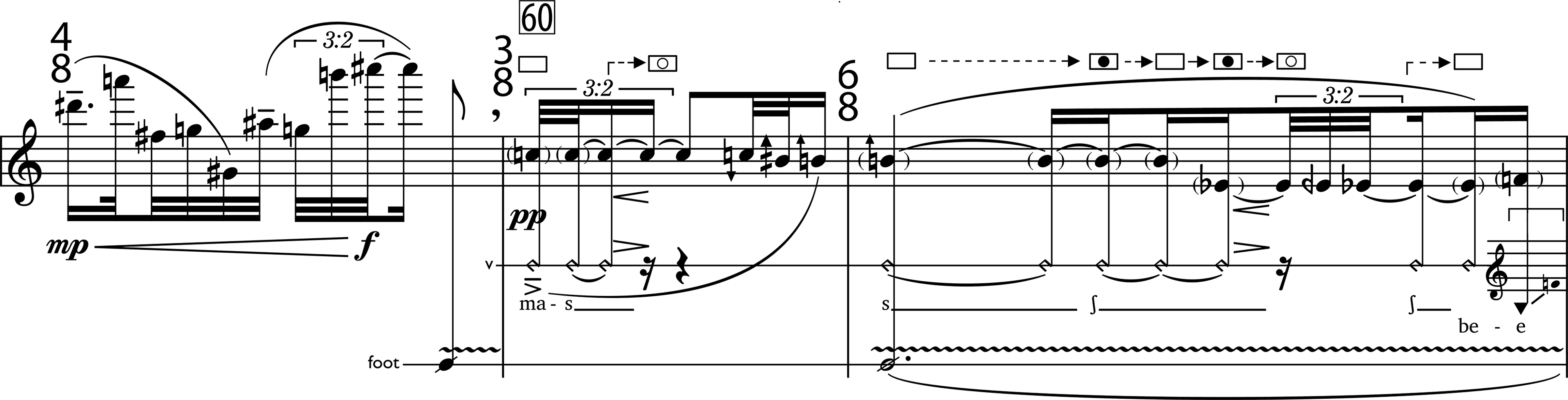
for solo female flutist/voice/percussion with electronic prelude
duration: ca 11 min
written for: Kazuko Ihara
commissioned by: with support of the Helge Ax:son Johnsons Foundation
first performance: 16 May, 2026; Tokyo, Japan
score published by BabelScores
ŠU.ÍL.LÁ is the Sumerian logographic name for a well-attested Mesopotamian prayer ritual meaning “the lifting of the hand.” In Akkadian the expression is read qātam našû [ˈqaː.tam naˈʃuː], literally “to raise the hand.” The ritual was a personal act of supplication performed while standing before a deity, in which the raised hands themselves constituted the prayer as much as the spoken words.
The title GI.ÍL.LÁ is a newly formed parallel to this ancient formula. The Sumerian sign GI denotes “reed” or “flute,” while ÍL.LÁ corresponds to the verb “to lift.” By analogy with ŠU.ÍL.LÁ, the expression may be read in Akkadian as embūbam našû [emˈbuː.bam naˈʃuː] — “the lifting of the flute.” The phrase reimagines the traditional gesture of raised hands as an instrumental act in which the flute becomes the medium of prayer and ritual speech.
Together, ŠU.ÍL.LÁ : GI.ÍL.LÁ traces a transformation from bodily gesture to sounding instrument — from the silent elevation of the hands to the elevation of breath as music.
The piece may be performed either in its originaly concieved version with an electronic prelude (ŠU.ÍL.LÁ), which includes the preparatory actions described above, or in a reduced version without electronics, beginning directly at bar 9. When performed without the electronic prelude, the work should be listed in the program under the title GI.ÍL.LÁ only.
ŠU.ÍL.LÁ : GI.ÍL.LÁ forms the basis of the solo part of name name name name (2026-) for solo performer and ensemble, which is itself a component of PARTICLES for ensemble and electronics (2022-)